
Rich and Stephanie Thompson built Ohio Hot Tub Warehouse on a straightforward premise: factory-direct, American-made hot tubs at prices a traditional showroom can't match. The product is genuinely excellent. The value proposition is clear. And the business had real customers who were happy with what they bought.
The website, though, was working against them.
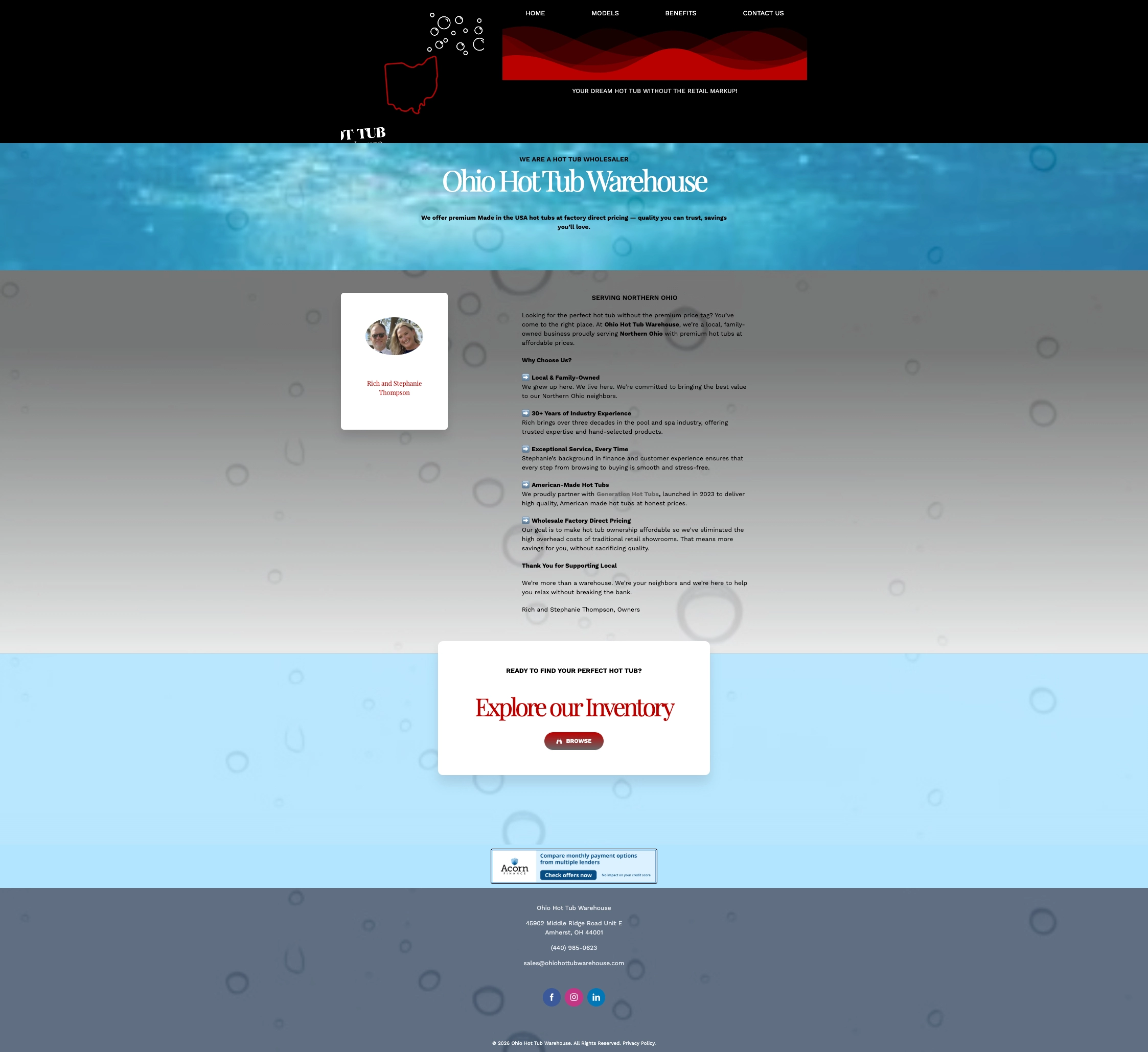
Rich and Stephanie had built the original site themselves, which took real effort and genuine care. It had information about their inventory, and it was live and functional. But it was structured around what was convenient to build rather than what a buyer actually needs when they're researching a major purchase.
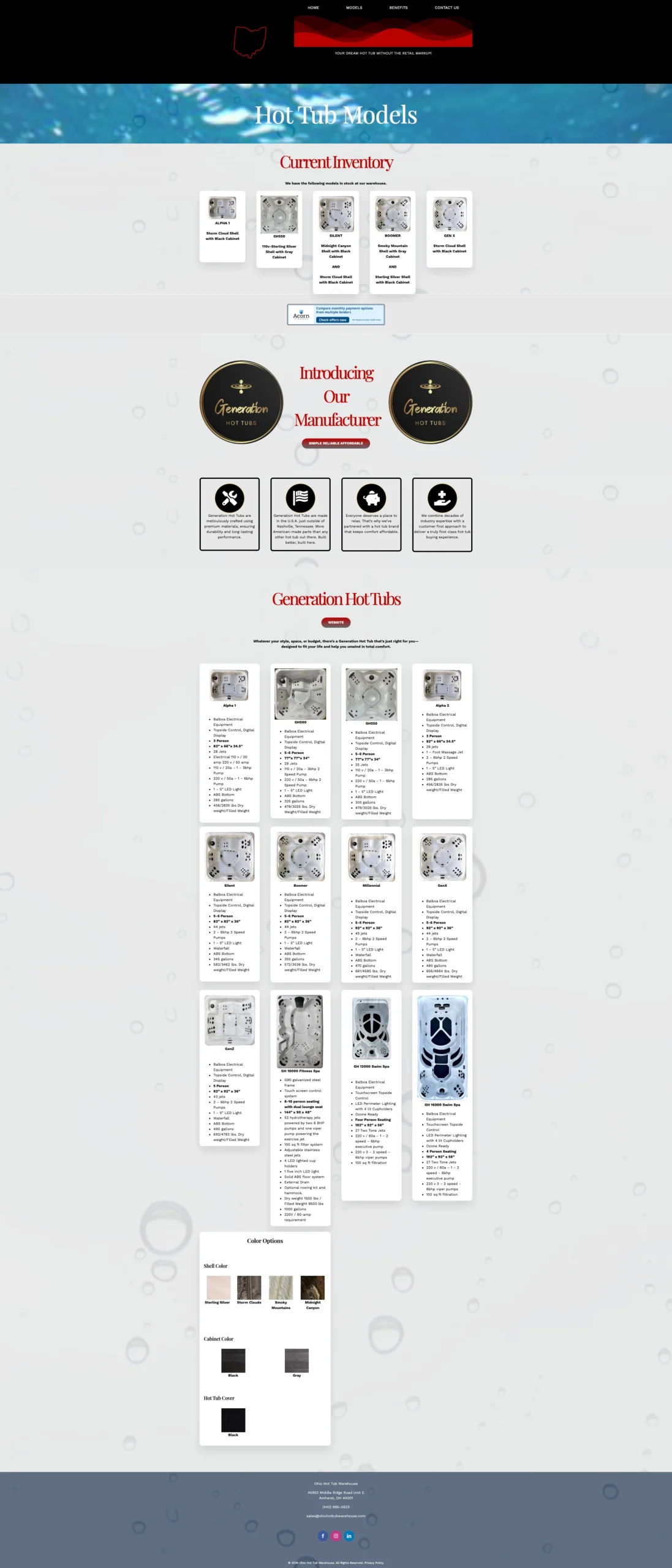
Twelve different hot tub models lived on a single page. Every specification, every feature, every detail for every tub was stacked one after another in a format that required a visitor to scroll endlessly and hold a tremendous amount of information in their head simultaneously. There was no way to compare models. No way to understand which tub was right for which buyer. No way to feel confident in a decision before booking an appointment.
For a product that costs thousands of dollars and requires a buyer to feel genuinely informed before they commit, that experience was a significant barrier. People were likely leaving the site with more confusion than they arrived with.

When we sat down with Rich and Stephanie, we started asking questions about who was actually coming through the door. Not just demographics, but the situation a buyer was in when they started looking. What were they hoping a hot tub would do for their life?
Two distinct personas emerged clearly.
The first was the health and wellness buyer: someone managing chronic pain, recovering from injury, dealing with poor sleep, or simply worn down by stress and looking for something restorative they would actually use every day. This person needs to understand the science behind hydrotherapy. They need to feel confident that this is a legitimate health investment, not a luxury indulgence they'll feel guilty about in six months.
The second was the short-term rental host: a property owner on Airbnb or VRBO who had learned, or suspected, that a hot tub was one of the highest-ROI amenities they could add to their listing. This person doesn't need to be sold on relaxation. They need numbers. Occupancy rates, nightly rate increases, return on investment.
The original site spoke to neither of these buyers specifically. It presented a generic product catalog with no acknowledgment that different people come to this decision for entirely different reasons. Recognizing and speaking to both audiences separately was the strategic foundation everything else was built on.
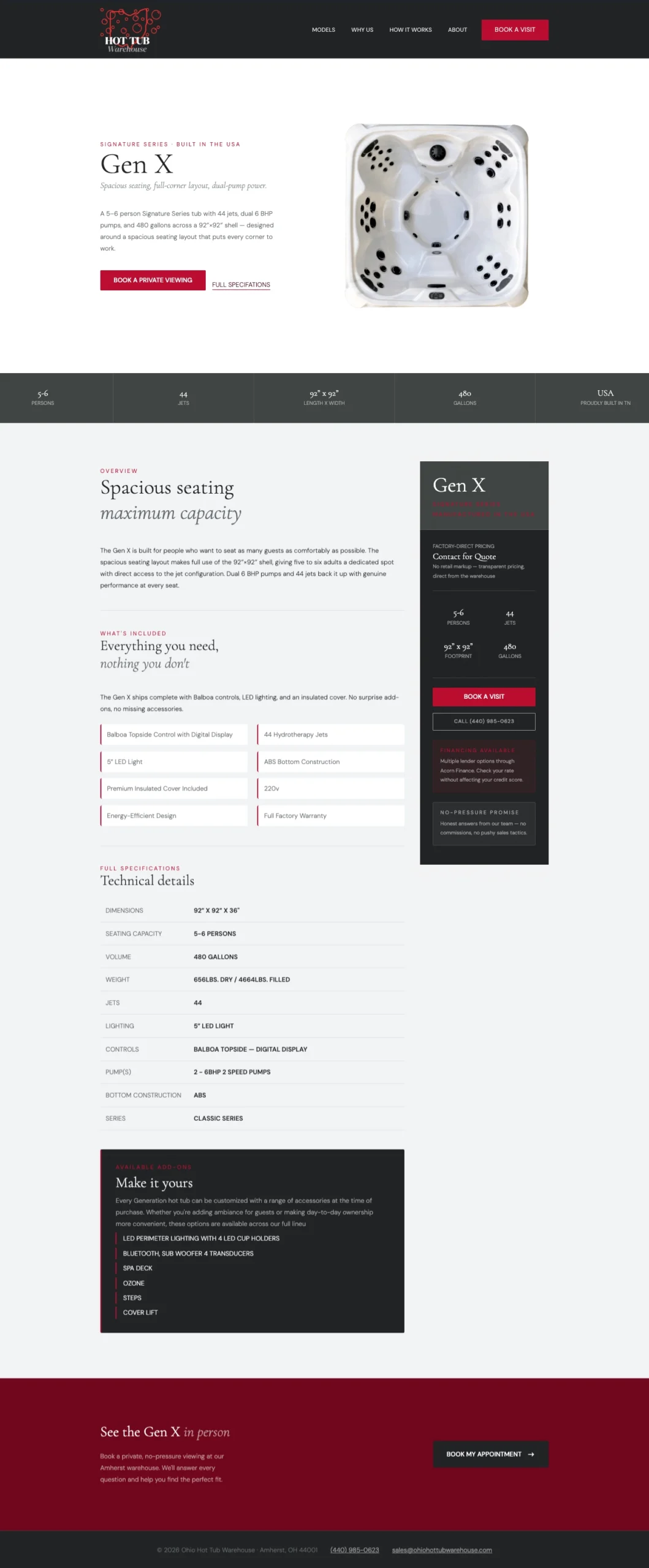
The most structurally important change was breaking the single overloaded product page into individual model pages for all twelve tubs. Each model now has its own space: full specifications, dimensions, jet count and placement, electrical requirements, capacity, and photography. A buyer can evaluate one tub at a time, bookmark the ones they're interested in, and arrive at their private viewing with a real shortlist instead of a foggy memory of a page they scrolled through a week ago.
The models page itself organizes the lineup by series: Classic, Signature, and Swim Spa. Each series has a clear positioning statement so a buyer understands which category fits their situation before they start comparing individual models. The Classic Series for buyers who want American-made quality without a premium price tag. The Signature Series for buyers who want the full experience. The Swim Spa Series for buyers who want both a lap pool and a spa in a single footprint.
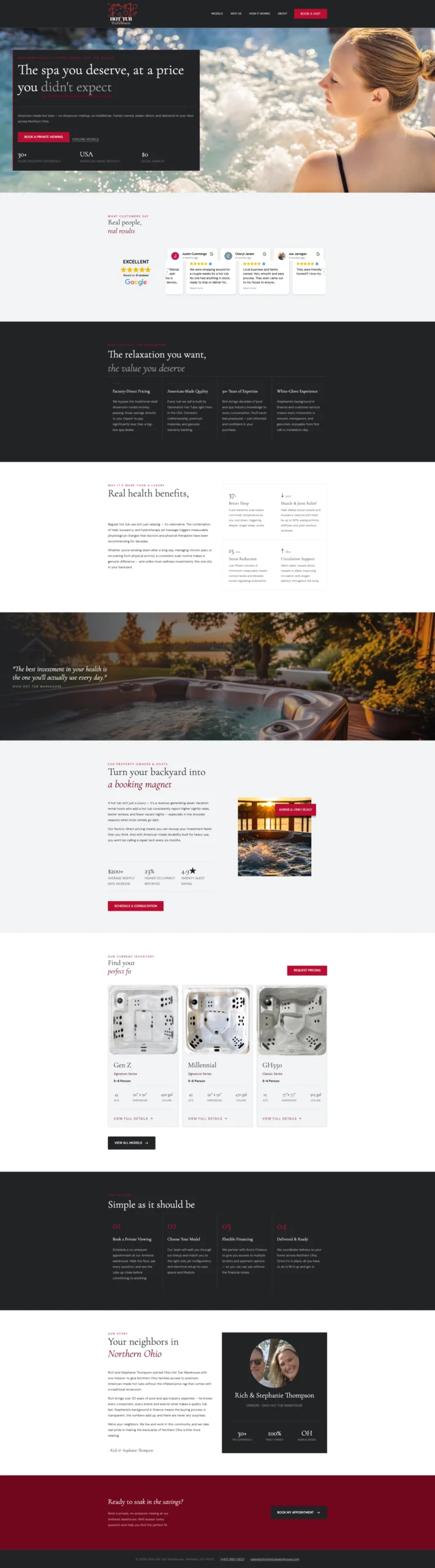
On the homepage, the two buyer personas get their own dedicated sections. The health and wellness section leads with the science: specific statistics on sleep improvement, joint load reduction, cortisol reduction, and circulation support. The short-term rental section leads with revenue: average nightly rate increases, occupancy improvements, and guest satisfaction data. Each section speaks directly to what that buyer needs to hear in the language they're already using to think about the decision.
Rich and Stephanie's story gets its own section too. They're not a faceless warehouse. They're neighbors, Northern Ohio residents, a husband and wife with 30 years of combined expertise who built this business to give their community access to something they believe in. That story was buried on the original site. Now it's a reason to trust the people you're buying from.
Ohio Hot Tub Warehouse had a genuinely strong business that its website was underselling at every turn. The product was good. The value was real. The owners were trustworthy. None of that was communicating clearly because the site was organized around inventory rather than buyers.
The fix wasn't cosmetic. It was structural. Individual product pages gave buyers the information architecture they needed to make a confident decision. The dual persona strategy gave the homepage a way to immediately connect with two very different buyers and tell each of them something specific and relevant. And Rich and Stephanie's story gave the whole thing a human foundation that a buyer can actually trust.
A hot tub is not an impulse purchase. The buyer who eventually books a private viewing has usually spent time researching, comparing, and second-guessing themselves. The site's job is to do that work with them honestly and thoroughly, so that by the time they walk into the warehouse in Amherst, they're not starting from scratch. They're ready to say yes to the tub they've already chosen.