
B&B Metal Designs makes exceptional things. Custom iron drapery hardware. The kind that ends up in homes designed by names like Corey Damen Jenkins, Eric Ross Interiors, and Duväl. The craftsmanship speaks for itself.
The old site didn't know that.
It was built the way most product sites are built, with detailed written explanations of every product category, SEO-optimized copy, and structured content designed to rank and inform. For a business selling directly to homeowners, that approach makes sense. But B&B's customer isn't a homeowner researching drapery hardware on Google. It's an interior designer who already knows exactly what they need, and is deciding whether B&B's aesthetic and capability is the right fit for their client's home.
That customer doesn't want to read. They want to see.

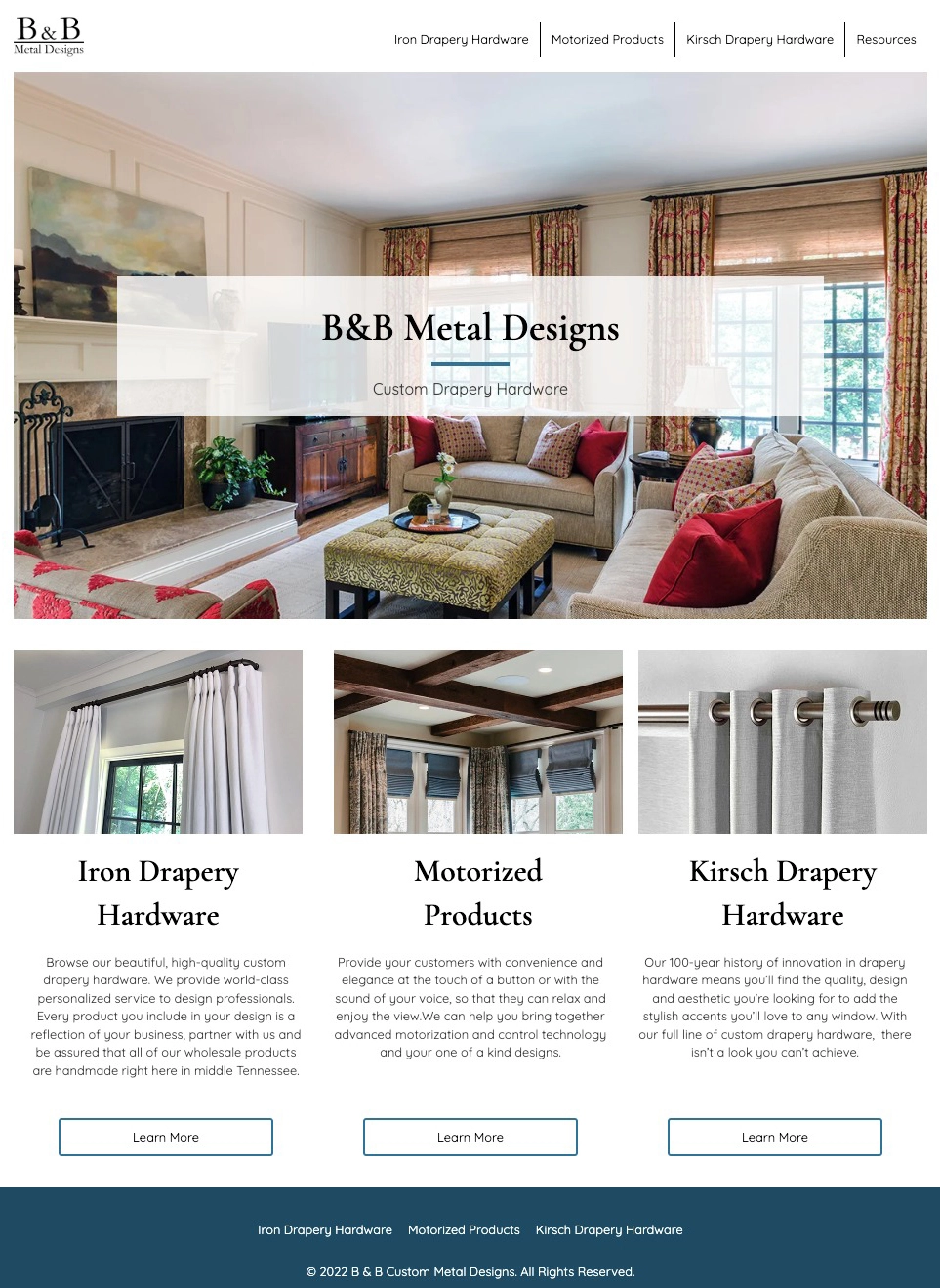
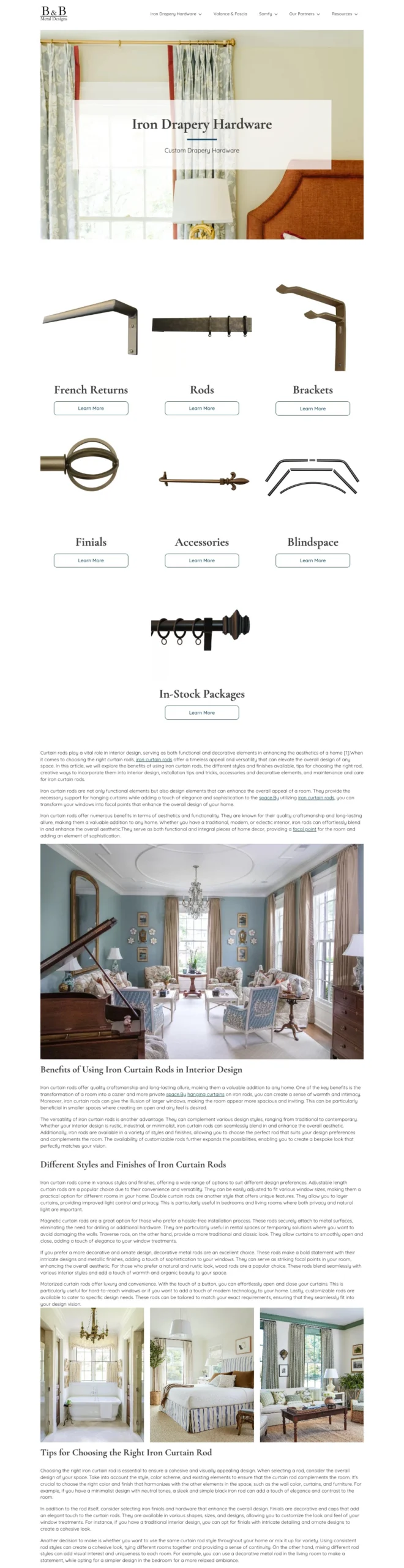
When we sat down with the B&B team, one thing became clear quickly: the entire sales relationship with an interior designer happens visually. A designer encounters B&B through a referral, a showroom, or a project they've seen. They come to the site not to be educated, but to be confirmed. To see evidence that the quality they've heard about is real, and that the range of work is broad enough to fit the vision they have for their client.
The old site was trying to explain what a designer already understood. Worse, it was burying the most compelling thing B&B had — the photography of their installed work in real, beautiful homes — under text written for a search engine instead of a person.
The insight that drove everything: stop explaining and start showing.
The new site strips away the explanatory copy and leads almost entirely with imagery and video. High-quality photography of installed hardware in real designer homes, the Flower Showhouse, Oak Hill, Winchester Lake House, and others, does the work that paragraphs of product description never could.
Product categories are organized the way a designer thinks about a project: Iron Hardware, French Returns, Decorative Tracks, Automated Tracks, and Roman Shade Kits. Each landing has a visual statement before a word of copy appears.
Technical video content fills the one gap that photography can't, showing how the hardware installs, moves, and performs. But it's filmed and edited for a professional audience. Not a how-to. A demonstration of capability.
Named designer galleries give the site the kind of social proof that matters in this industry: you can see exactly who has specified B&B hardware, in which spaces, for which clients. For an interior designer evaluating a new vendor, that list — Corey Damen Jenkins, Eric Ross, Duväl, JFY Designs — does more than any product description ever could.
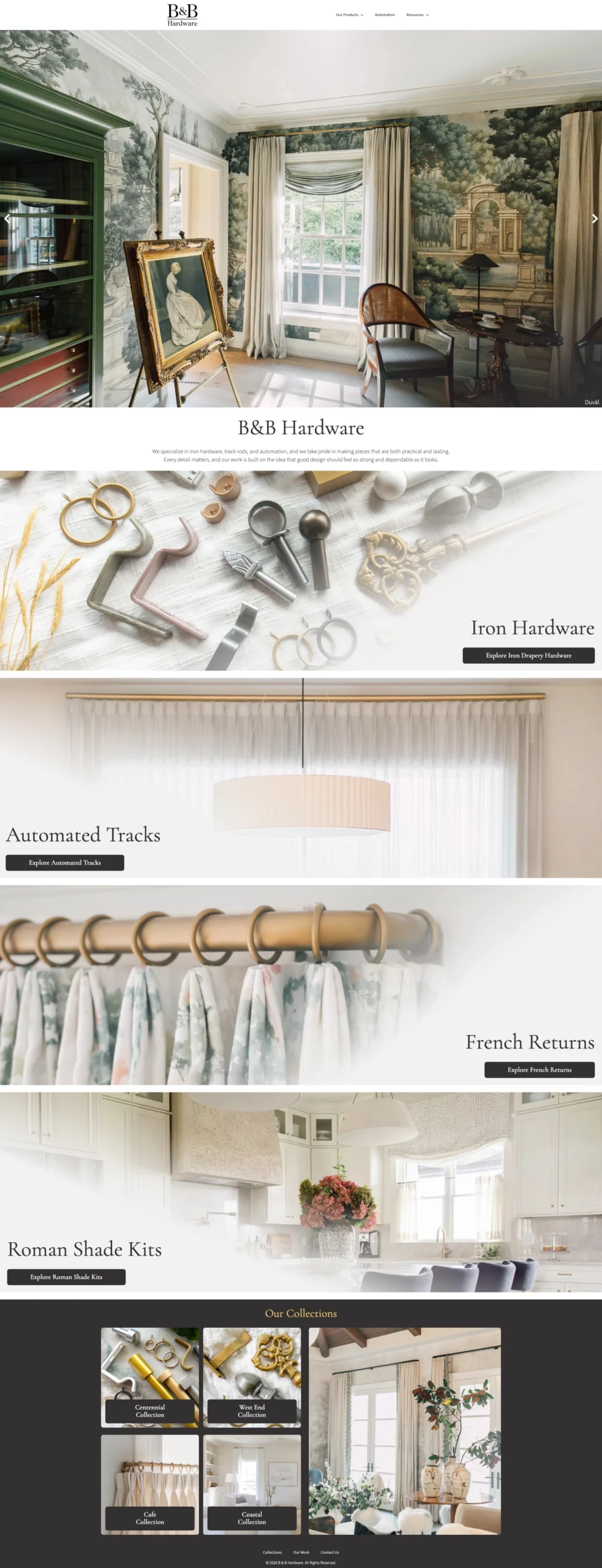
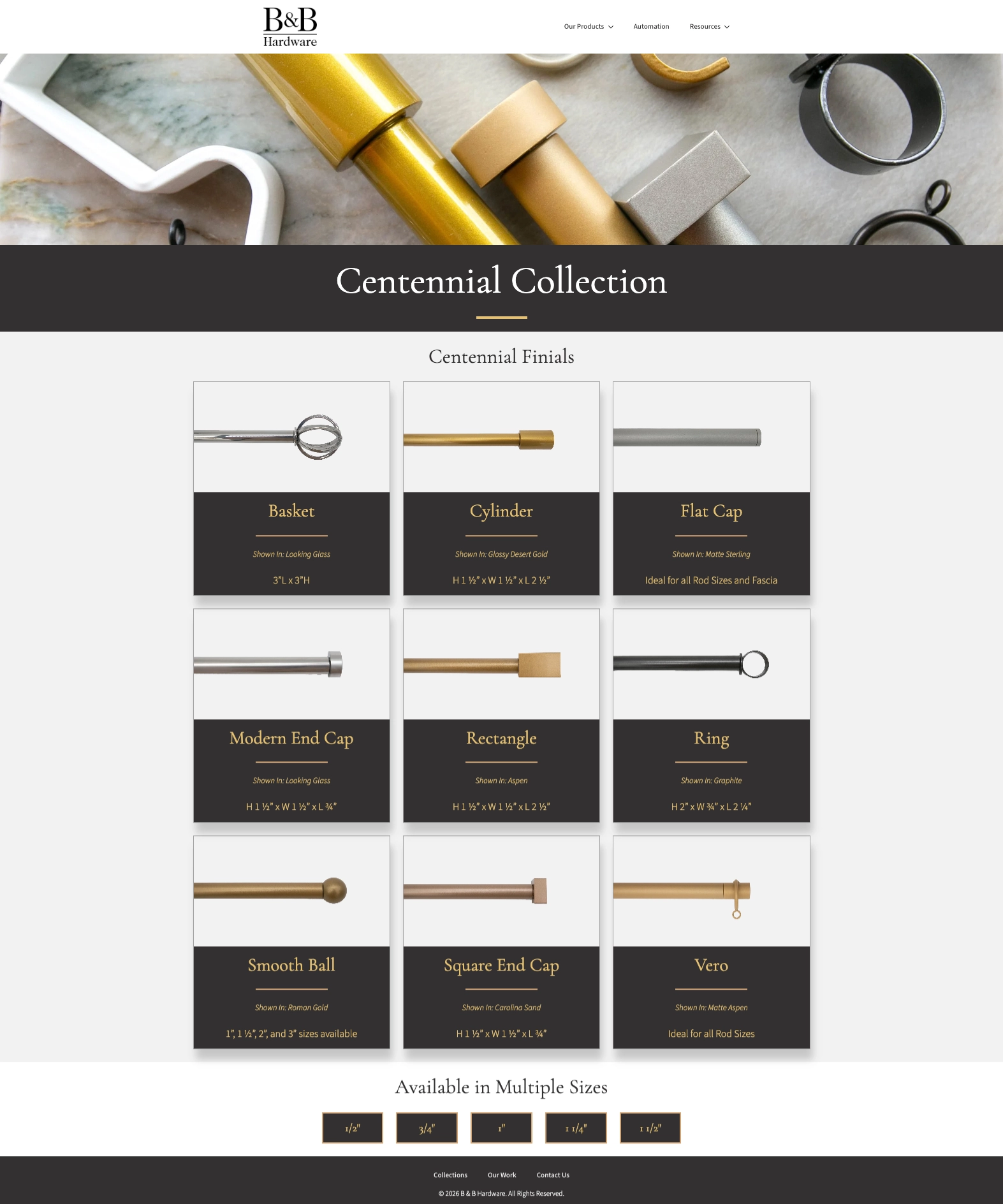
The B&B project is a clear example of something we believe strongly: the right website for your business is not the same as the right website for someone else's. A site built around SEO content and product explanations is the correct approach for many businesses. For B&B, it was actively working against them, creating friction with the exact customer they were trying to reach.
When you understand who is actually arriving at your site and what they need to see when they get there, the design decisions become obvious. For B&B, it meant stripping back almost everything a traditional site would include — and replacing it with confidence in the work itself.
Sometimes the best copy is no copy at all.